
Contrary to media reports and “geopolitical analysis” bros on X, Russia and China are not helping Iran against US and Israeli aggression. And here's why.
China: Economic Ties Trump Alliances
China’s biggest client is not Iran—it’s the United States. From a pure economic strategy, which is central to the CCP, the US is its best friend, and Beijing cannot afford to change that just because it has a political and military relationship with Iran. The US and China’s bilateral yearly trade and financial investment reached $560 billion in 2025, with the US remaining China's largest trading partner and representing about 8.8% of China's total global trade volume of $6.36 trillion that year. In comparison, trade with Tehran is only a fraction of that. While China has significant economic stakes in Iran (as its largest oil buyer, with 90% of Iranian crude going to China amid crises, including roughly 520 million barrels in 2025 at discounted rates), these do not translate to alliance-like guarantees. Beijing influences through commerce, infrastructure, and diplomacy, benefiting from U.S.-provided security without assuming responsibilities.
However, that doesn’t mean China is not providing Iran with surface-level or open-source intelligence to maintain its purely transactional friendship with Tehran, mainly to keep getting cheap oil through the Strait of Hormuz.
Another constraint preventing China from going all-in for Iran is Israel. Most people don’t know this, but Israel’s strategic agreement after the United States is with China. China-Israel trade and financial agreements have grown substantially over the years, hitting $16.3 billion in 2024, with China exporting $13.5 billion in goods to Israel and importing $2.8 billion, positioning China as Israel's second-largest trading partner and top import source. Also, Israel was instrumental in modernizing China’s commercial and military technological prowess by leaking American secrets to them—a well-documented phenomenon that stretches back to the Bill Clinton administration. Israel was key to Beijing joining the WTO and gaining favorable trade agreements across the globe. From China's perspective, it would rather upset America on a few occasions than anger Israel for a second. Because doing so would affect only the first, but the latter moves the first, which makes angering Israel the same as severing its vast economic and trade ties to the United States.
Russia: A Deeper Entanglement with the US
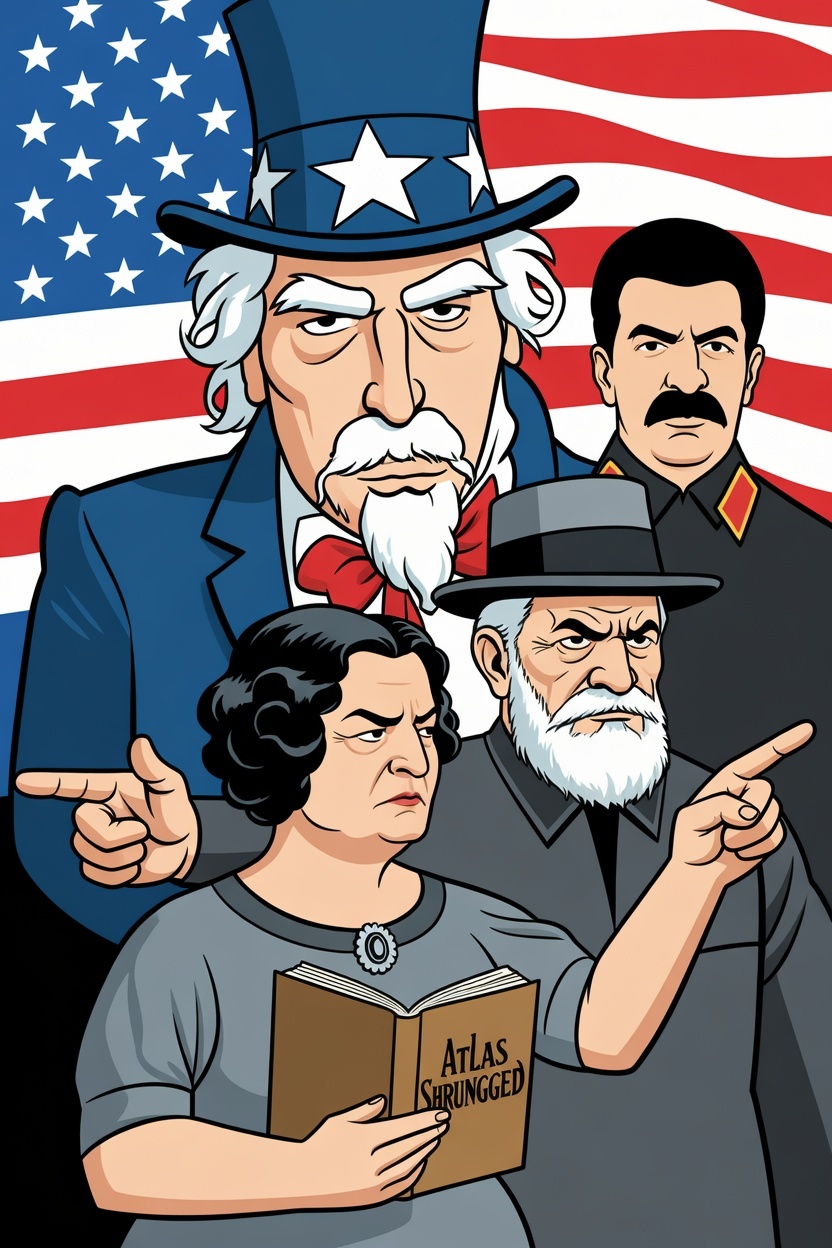
Russia is an entirely different ball game. Russia and the United States are culturally, politically, militarily, and financially more intertwined—historically and presently—than most people see or are even aware of. On paper, Russia has always been portrayed as America’s number one foe and timeless enemy, but in truth, Russia has always acted as the 51st state of the United States or vice versa—DC has been Russia’s Petrograd on the Western Hemisphere. These two are like Siamese twins, which makes it hard to tell the tail from the head. However, there are areas where we can see one side dominating more than the other. For example, in culture, political and philosophical thought, technology, and innovation, Russia is owning the US. On geopolitical and power projection outside, the US dominates and uses Russia as a decoy to bait, trap, and then vanquish its enemies. This bad cop-good cop strategy on a global scale—collaboration between the two countries—has been in effect since the early 1900s.
The Russian Revolution wouldn’t have been successful without the support of the United States. The US was the first to recognize the Bolshevik takeover of Russia and the first to open its vast financial wallets to prop up the Soviets. It was the US industrial might that built Russian industry into a monstrous scale. All of this led to close integration of both societies, giving Russia unparalleled access to America’s cultural and political institutions, which allowed Stalin and Trotsky to influence and dominate American political thought and debate more than Roosevelt or any other American president. In the 1930s, America’s leading public debates were dominated by Russians—by Stalin versus Trotsky. Nobody quoted or even saw as having intellectual worth for inspiring political movements, even the great American statesman FDR. Heck, Ayn Rand, a little schizophrenic Russian immigrant, has had more influence on the American ruling class than George Washington. Born Alisa Zinovyevna Rosenbaum in St. Petersburg in 1905, Rand fled the Bolshevik Revolution, emigrated to the US in 1926, and became a novelist, screenwriter, and philosopher whose Objectivist philosophy—emphasizing individualism, rational self-interest, and laissez-faire capitalism—shaped conservative and libertarian thought. Her novels like The Fountainhead (1943) and Atlas Shrugged (1957) influenced figures such as Alan Greenspan (former Fed Chair), Paul Ryan, Ted Cruz, and Supreme Court Justice Clarence Thomas.
While Nazi Germany slaughtered Europeans and decimated the British Empire, no single American cared. However, because of the extensive cultural and political institutions captured by the Russians, the public had their hands on their hearts for Moscow. It was this public pressure that pushed the US to enter the war to aid Russia.
The Soviets kindly returned the favor by baiting the Nazis into a sense of false alliance with their Molotov-Ribbentrop Pact—a 1939 non-aggression agreement between the Soviet Union and Nazi Germany that divided Eastern Europe into spheres of influence and allowed Hitler to invade Poland without fear of a two-front war. And then, when Germany was embroiled in war and stretched financially and militarily, they switched to the US and stabbed Germany in the back, leading to its fall and defeat. It didn't stop there. Russia maintained close relations with Japan throughout the war to gain intelligence and to give them a sense of false confidence, thinking the Soviets had their back, only to join the Allies in the final moment to finish Imperial Japan off.
Zionist and Soviet Conspiracy to Destroy the British Empire
After the war ended, Russia and the US planned and executed a new world order without the mighty British Empire. The key to dethroning the British Empire was through the Middle East, and the holders of that key were the Zionists and oil. Whoever controlled these two keys would inherit the Middle East from the British Empire and control it forever. So the US and the Russians divided the keys equally among themselves. The Russians took the Zionists, and the Americans took the oil. But the oil and the Zionists alone would not deliver the desired long-term aims of the two giants. Gaining control of social and ideological forces shaping the world was considered. Russia took the secular Arabs, America the religious hardline Muslims through Saudi Arabia. With Saudi Arabia firmly in its domain of control—both the oil and the two most holy sites in Islam, Mecca and Medina—the US has been draining the Middle East by the barrel of oil and controlling Islam via the minbar of Masjid al-Haram.
This is the source of both the establishment of Israel as a Jewish state and the deeper US-Saudi dominative relationship. The first step the Soviets decided was to drive the British Empire out of the Middle East once and for all. To do that, Moscow had to throw their full-throated support behind a faction of hardcore Zionists, mostly led by Eastern Europeans and former Soviet spies, in coercing them into declaring a full national state. You see, most people fall for the midrashic history that it was the British who gave the Zionists a Jewish state in Palestine. This can’t be any farther from the truth. It was the Soviets who gave the Zionists Palestine while playing friend to its Arab secular and communist friends. The British Empire, as declared in the Balfour Declaration, only agreed to help Jews find a “homeland” in the Holy Land—a policy that was supported by the Ottoman Empire since the fall of Spain during the Inquisition. This is why Istanbul remained the second biggest office of the Zionist movement after Britain. Because in principle, Muslim countries and their people supported the initiative that Jews should live and invest in the Middle East as their homeland, just like they had been doing in Britain, France, and America. In fact, the Zionists were the golden cap on top of the trophy for global power competition. Whoever had the Jews on their side was always destined to emerge as the dominating global superpower. This was true for the rise of Spain, the Dutch, the British Empire, and the expansion of the Ottoman Empire. Jewish people, and especially Zionist activists and thought leaders, were key pillars in the colonial British Empire machine. In fact, the office of British colonial administration in the whole of the Middle East was handled by the Zionists, who largely saw themselves as proud people of the British Empire, serving and promoting the interests of the Crown. This was well reflected by the fact that the two leading Jewish leaders of the Zionist movement at that time, Chaim Weizmann and David Ben-Gurion, were British spies. The only exceptions were Irgun and Palmach, the military wings of the Zionists who were supported and propped up by the Soviets in order to remove the British from the Middle East, which they succeeded in doing. After turning the Zionists against the Crown, Moscow was certain that this was the first domino that would lead to the fall of the British Empire. And that was precisely what happened. As soon as the Zionists declared independence and seceded from the British Empire, the entire colonial machine structure of the Empire collapsed—because that’s how important the Zionists were to the Empire and how devastatingly the Soviets understood, planned, and executed it. The British Empire spies were out, and Soviet spies were in—leading to a brief civil war in Israel, which moved Russia’s factions from fascist terrorists (blowing up the King David Hotel and carrying out genocides in villages, denied and ashamed by the British faction of the Zionists) into a force of nature in Israel’s destiny.
However, the Zionists were outnumbered in Palestine, and since they lost British protection, they were susceptible to Arabs overwhelming them. This was when Moscow decided to flood Palestine with massive replacement refugees from Eastern Europe from the DP camps, regardless of whether they were Jews or Russian prisoners of war captured by the Nazis. The Russians filled the boats, charged the Jewish Agency for it, and shipped its spies, Jews it didn’t like, and everyone they could find in the camps to Palestine. The goal was to create a state that could not only fight and defend itself today but one that Moscow could have forever influence on due to the Russians embedded in the state.
Soviet’s bet paid off in the 1970s when the Soviets—struggling with high inflation and lack of market for their vast energy—decided to use Israel’s hysteria and fear over its neighbors conspiring to exterminate them to plant in the heads of their leaders and security apparatus the idea that war was imminent and the Arabs were going to attack Israel from Syria. This led to the 1973 war of Israel with Arabs, which resulted in the Arab-imposed oil embargo on the world. As soon as that happened, suddenly there was a place with cheap energy from which the world could draw on: Russia. Overnight, the Russians became rich, and the entire Soviet state transformed and became prosperous. After the dust settled and the embargo was no longer in place, Russia pivoted with the help of Israel and its influence on American power and cultural institutions via Israel, and launched the green movement with one objective: replacing Arab oil with Russian gas, packaged by their experts as a more climate-friendly option. This was equally successful as the establishment of the Jewish state in the heart of the Arab and Islamic world. Today, the majority of Europe, Latin America, and the US is dominated by green energy politics.
The first Gulf War resurrected Russia after the collapse of the Soviets. The second war, in which Russia’s “ally” Saddam Hussein was overthrown and hanged, gave full new life to Russia. The country suddenly became powerful, influential, and prosperous once again—despite Saddam begging Putin to help him by pressuring the US not to invade his country. Putin laughed at him by telling him 'the US helped me with Chechnya,' which was about to kick Russia’s ass before 9/11 happened—leading Moscow to gain global support for its aim to crush the Chechens by lumping them together with al-Qaeda and framing the war on them as a war against “terrorism.”
In February 2022, Russia shocked the world by launching an unprovoked war on Ukraine after the Biden administration seemed to publicly lobby Russia to do so. Long before the war decision was apparently finalized by Putin, the Biden administration kept saying Russia was set to attack Ukraine, with an ominous caveat of warning China not to get involved. This bizarre behavior by Biden and his handlers was sold to the public as an example of US intelligence, foresight, and genius. But in reality, it was a psyop.
Russia launched the war on Ukraine in part with the hope of luring China into a quagmire trap under a false friendship pretext. However, Xi—a master statesman who is well-versed in the history of Soviet treachery—refused to take the bait, despite Putin asking Xi to get involved in the war to a greater capacity. After that bad cop-good cop trap failed, America demanded that Russia do more and deliver something of importance. Going home empty-handed after all the destruction of Ukraine was something Biden was unwilling to accept. That was when Putin pivoted and signed a pact with little Rocket Man, North Korea—the Treaty on Comprehensive Strategic Partnership, signed in June 2024, which includes mutual defense clauses obligating "military and other assistance" in case of attack, alongside broad cooperation in economy, technology, science, and security, effectively reviving Cold War-era ties. This pact will serve in the future as America’s backdoor entry into North Korea, through which it will destroy or at least destabilize the country and overthrow Kim Jong-un. It’s not if North Korea will change and become America’s subservient state right on the doors of China, but when—all thanks to Russia’s immaculate capacity in deception and shape-shifting ability.
Now, with the Strait of Hormuz closed after Donald Trump launched an illegal war on Iran, Russia once again finds itself becoming a center of energy politics. The Russian gas market has exploded through the roof already. Europeans are talking about buying from them once again, and the Trump administration is weighing seriously on lifting all oil sanctions on Russia after it gave waivers to India to purchase Russian oil. Everyone else is suffering except Russia. As the Middle East burns, Russia banks on it.